
 EN
EN
Choosing the right vehicle tracking solution requires more than simply picking the most affordable device on the market. A high-quality 4g gps tracker gives fleet managers, logistics operators, and private vehicle owners the real-time visibility they need to protect assets, reduce operational costs, and improve driver accountability. With the rapid advancement of cellular networks, the 4G LTE standard has become the dominant transmission protocol for reliable, low-latency location data — making it the preferred choice for any serious buyer evaluating vehicle tracking hardware today.
This complete buyer guide is designed to walk you through every critical dimension of selecting a 4g gps tracker for your vehicle or fleet. From understanding core hardware specifications and installation methods to evaluating platform compatibility and total cost of ownership, this guide provides the structured decision framework that procurement professionals and fleet managers need. Whether you are deploying a single tracker on a company car or scaling up to hundreds of units across commercial vehicles, the principles covered here apply directly to making a well-informed, confident purchase.
Understanding the Core Technology Behind a 4G GPS Tracker
How 4G LTE Changes Vehicle Tracking Performance
The transition from 2G and 3G to 4G LTE networks has had a profound effect on the performance of vehicle tracking hardware. A 4g gps tracker operating on 4G LTE benefits from significantly lower latency when transmitting location coordinates to the server. This means the gap between a vehicle's actual position and the displayed position on the monitoring platform is measured in seconds rather than minutes — a critical advantage for high-value cargo monitoring and real-time dispatch management.
Beyond speed, 4G networks provide greater stability in dense urban environments where 2G signals were often congested or throttled. For logistics operations running through busy city corridors, ports, or industrial zones, a 4g gps tracker maintains consistent connectivity where older hardware would drop offline. The wider bandwidth also supports richer data payloads, meaning devices can simultaneously transmit location, speed, ignition status, and sensor inputs without compromising update frequency.
Another practical consideration is network sunset timelines. Mobile carriers in many regions have already switched off 2G and 3G infrastructure, rendering legacy trackers non-functional. Investing in a 4g gps tracker today ensures your hardware remains compatible with current and near-future cellular infrastructure, protecting your investment for the long term.
GPS Positioning Accuracy and Satellite Constellation Support
Cellular connectivity handles data transmission, but positioning accuracy depends on the GPS chipset inside the tracker. A well-designed 4g gps tracker incorporates support for multiple satellite constellations — including GPS, GLONASS, and in some cases BeiDou or Galileo — which dramatically improves fix speed and accuracy, especially in areas with obstructed sky view such as underground parking, mountainous terrain, or dense urban canyons.
Horizontal accuracy for quality devices typically falls within a 5–10 meter radius under open-sky conditions. When combined with 4G data transmission, this level of precision is sufficient for lane-level tracking on highways and precise geofence triggering at facility entry points. Buyers should verify the chipset specifications of any 4g gps tracker they evaluate, as budget devices sometimes use less sensitive chipsets that compromise location reliability in challenging environments.
A-GPS (Assisted GPS) is another feature worth examining. This technology uses cellular network data to accelerate satellite acquisition — reducing the cold-start fix time from several minutes down to under 30 seconds. For vehicles that make frequent short stops, fast A-GPS performance ensures that no movement goes unrecorded, maintaining a complete and accurate trip history in the monitoring platform.
Key Hardware Features to Evaluate Before Buying
Power Supply Configuration and Wiring Options
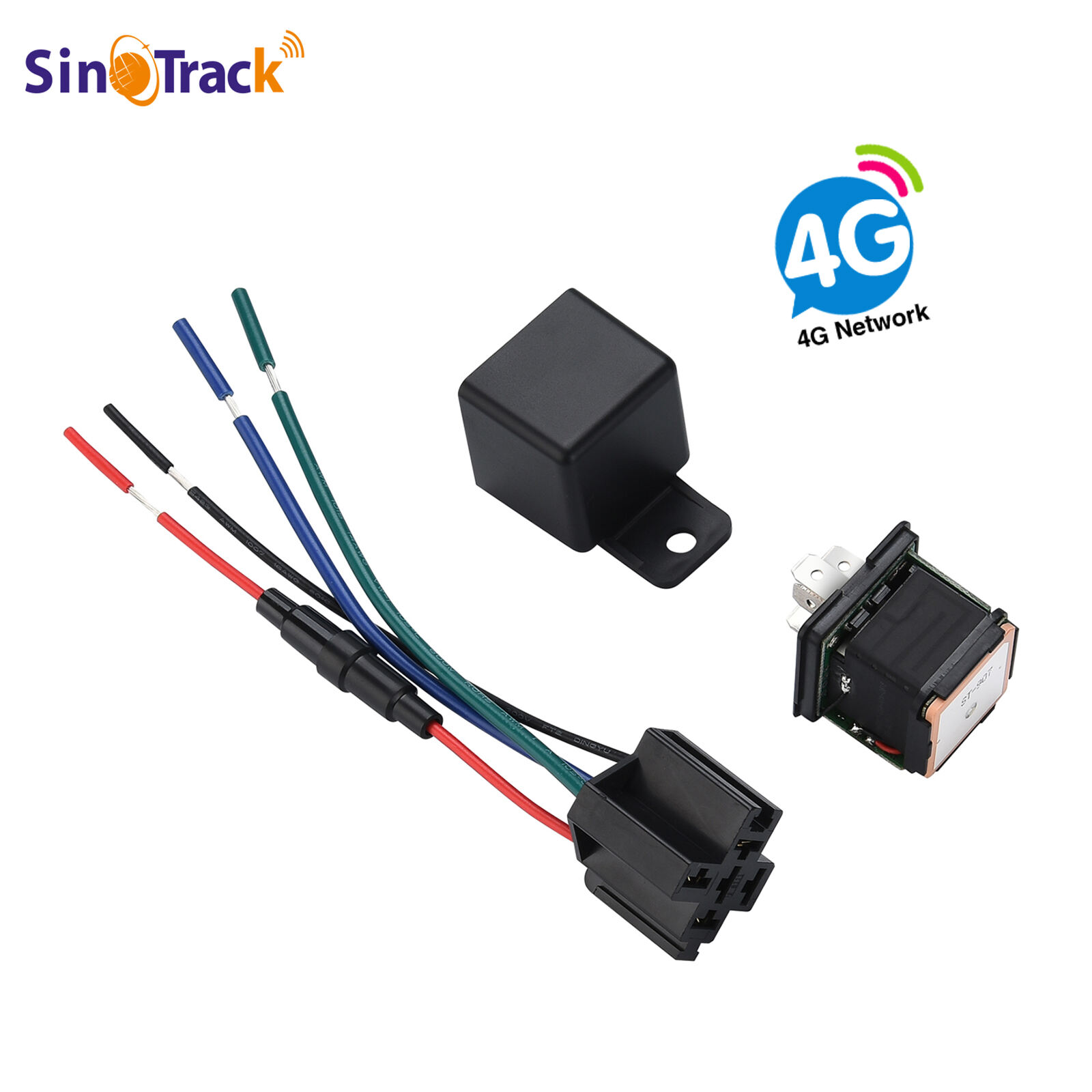
The power supply design of a 4g gps tracker directly determines how it is installed and what safety features it can support. Hardwired trackers connected to the vehicle's 12V or 24V power system are the preferred choice for commercial fleet deployments because they eliminate battery replacement concerns and enable continuous monitoring without power interruption. Many professional-grade devices, such as the 4g gps tracker with relay support, include a 4-pin connector that allows direct integration with the vehicle's ignition circuit, fuel line, or starter relay — enabling remote immobilization when necessary.
The relay-compatible design is especially significant for anti-theft and fleet discipline applications. When a 4g gps tracker supports relay output, the monitoring platform can send a command to cut engine power or disable the fuel circuit remotely. This feature must be implemented with proper safeguards — typically the command is only executable when the vehicle is stationary or below a defined speed threshold — to ensure road safety compliance.
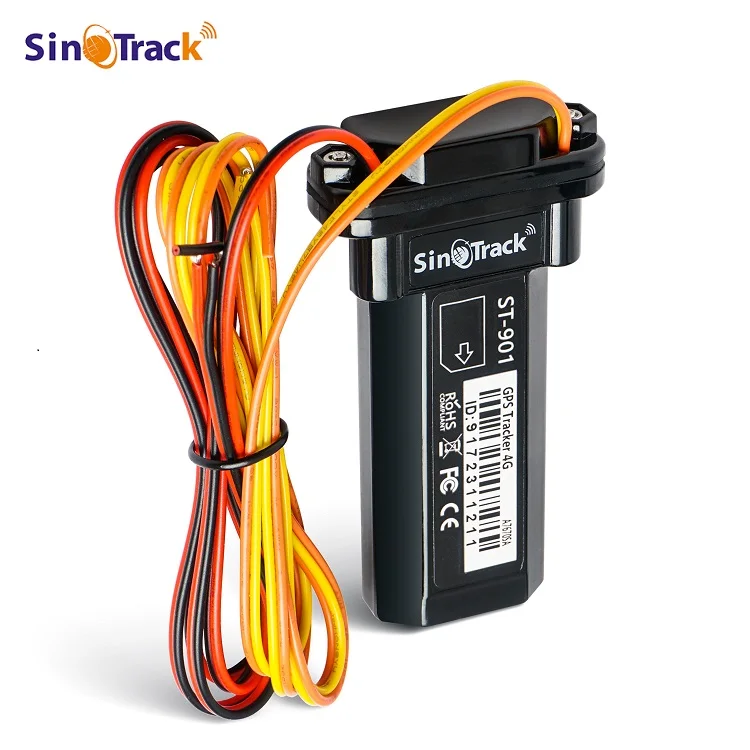
For applications where hardwiring is not practical, such as rental vehicles, contractor equipment, or short-term monitoring, some 4g gps tracker models include an internal backup battery that maintains operation even when the main power supply is interrupted. Tamper detection alerts notify operators immediately if the device is disconnected, making covert removal far less useful to a would-be thief.
Enclosure Rating, Temperature Range, and Build Durability
Industrial vehicle tracking deployments expose hardware to harsh conditions including vibration, moisture, temperature extremes, and road debris. A professional-grade 4g gps tracker should carry an IP67 or higher ingress protection rating, confirming that the enclosure resists dust intrusion and temporary water immersion. Devices mounted under the chassis or inside wheel wells are particularly exposed and require robust physical protection.
Operating temperature range is another specification that buyers in extreme climate regions must review carefully. Commercial vehicles operating in northern winters or tropical environments require a 4g gps tracker rated to perform reliably across a wide temperature band — typically from -40°C to +85°C for industrial-grade components. Consumer-oriented devices may only be tested to a narrower range, which can result in intermittent failures or permanent damage when conditions exceed specifications.
The overall build quality of the housing, connector seals, and antenna design should align with the expected deployment environment. Compact form factors are desirable for covert installation, but not at the expense of signal performance. A well-engineered 4g gps tracker balances size, durability, and antenna gain to deliver consistent positioning and cellular connectivity across diverse installation positions within the vehicle.
Platform Compatibility, Software, and Data Access
Monitoring Platform Requirements and Protocol Support
A 4g gps tracker is only as useful as the software platform it communicates with. The tracker hardware must use a communication protocol that your chosen monitoring platform supports. The most widely adopted open protocol in the industry is GT06, GPRS, and similar formats supported by platforms including SeekRoad, GPSGate, and open-source solutions like Traccar. Buyers should confirm protocol compatibility before committing to a hardware purchase, particularly when integrating into an existing fleet management system.
Many manufacturers now bundle their 4g gps tracker hardware with a dedicated mobile application and web dashboard, which significantly lowers the barrier to deployment for small fleets or individual users. A good companion app should display real-time vehicle position on an updated map layer, provide historical trip replay, support geofence creation and alert configuration, and send push notifications for events such as speeding, ignition on/off, or unauthorized movement.
For larger fleets, API access is an important evaluation criterion. If the monitoring platform offers a data API, fleet management software, ERP systems, and dispatch tools can pull location data programmatically to automate reporting, proof-of-delivery workflows, and compliance documentation. A 4g gps tracker feeding into an API-enabled platform can become a cornerstone of a broader logistics digitization strategy rather than a standalone monitoring device.
SIM Card Requirements and Data Plan Considerations
Every 4g gps tracker requires an active SIM card to transmit data over the cellular network. Buyers have three primary SIM options to evaluate: a standard nano-SIM from a local carrier, a global roaming SIM for international deployments, or an embedded eSIM that can be provisioned remotely. For domestic fleet operations, a local carrier SIM typically provides the best data rates and coverage reliability. For cross-border logistics or equipment that travels internationally, a global IoT SIM with multi-network roaming is strongly recommended.
The monthly data consumption of a 4g gps tracker is generally modest — most devices transmit between 5 MB and 30 MB per month depending on update frequency settings. Despite the low data volume, buyers should review carrier plans carefully to avoid paying for excessive data allowances or incurring overage charges. Some manufacturers offer bundled SIM services optimized for tracking hardware, which can simplify procurement and reduce administrative overhead for large deployments.
APN configuration is a practical setup step that buyers should be prepared to handle. The correct APN must be programmed into the 4g gps tracker via SMS command or configuration tool so that the device connects to the correct cellular data gateway. Most reputable manufacturers provide clear documentation and customer support to guide buyers through this configuration process, which typically takes only a few minutes once the SIM is installed.
Total Cost of Ownership and Procurement Strategy
Breaking Down the True Cost of a Fleet Tracking Deployment
The purchase price of a 4g gps tracker unit is only one component of total cost of ownership. Buyers conducting a thorough procurement analysis must account for SIM card activation and monthly data costs, platform subscription fees, installation labor, and long-term hardware maintenance or replacement cycles. Underestimating these ongoing costs is one of the most common mistakes made by first-time fleet tracking buyers, often leading to budget overruns and frustration with the total investment.
Installation costs vary depending on whether the deployment uses OBD-II plug-in trackers, which require no wiring work, or hardwired units with relay outputs that require a qualified automotive electrician. For large fleets, negotiating bulk installation pricing with a qualified installer can meaningfully reduce per-unit deployment costs. When evaluating a hardwired 4g gps tracker with relay capability, the added installation complexity is justified by the enhanced feature set and greater tamper resistance compared to plug-in alternatives.
Buyers should also factor in the hidden cost of poor hardware quality. Devices that fail prematurely, lose connectivity intermittently, or require frequent replacement create ongoing operational disruption and inflate the true cost per vehicle tracked. Sourcing a 4g gps tracker from a manufacturer with documented quality control processes, product certification records, and accessible customer support is a sound risk management strategy that protects the long-term value of the investment.
Scalability and Future-Proofing Your Tracker Investment
A procurement decision made today should account for where your fleet or tracking requirements will be in three to five years. A 4g gps tracker platform that supports over-the-air firmware updates allows the manufacturer to push performance improvements, security patches, and new feature unlocks without requiring physical device replacement. This capability significantly extends the useful life of the hardware and reduces the total replacement cadence across a large fleet.
As fleets grow, the monitoring platform must scale alongside the hardware deployment. Before committing to a specific 4g gps tracker ecosystem, buyers should test the platform's performance with simulated large fleet data sets, verify that multi-user access controls and role-based permissions are available, and confirm that the vendor has a track record of supporting enterprise-scale deployments without degraded service quality.
Integration readiness is the final scalability dimension. The ability to connect a 4g gps tracker system with fuel management software, driver behavior analytics tools, maintenance scheduling systems, and ERP platforms transforms the tracker from a simple location device into a comprehensive operational intelligence asset. Buyers who plan for integration from the outset avoid costly re-platforming projects down the road.
FAQ
What is the difference between a 4G GPS tracker and a 2G GPS tracker?
A 4g gps tracker uses 4G LTE cellular networks to transmit location data, delivering faster update speeds, lower latency, and more stable connectivity compared to 2G alternatives. In many countries, 2G networks have already been decommissioned, making 4G the only viable choice for new deployments. The performance improvement is especially noticeable in urban areas and during high-frequency tracking requirements.
Can a 4G GPS tracker be installed on any vehicle type?
Yes, a 4g gps tracker can be installed on cars, trucks, motorcycles, buses, construction equipment, and trailers, provided the correct power supply configuration is used. Vehicles with 12V systems use standard wiring, while heavy commercial vehicles with 24V systems require a compatible voltage input range. Always verify the device's voltage specifications against the target vehicle before installation.
How often does a 4G GPS tracker update its position?
Most 4g gps tracker devices allow the update interval to be configured via the monitoring platform or SMS commands. Common intervals range from every 10 seconds for high-resolution real-time tracking to every 60 seconds for standard fleet monitoring. Higher update frequencies consume more data and may slightly reduce battery life on devices with internal batteries, so the interval should be matched to the operational need.
Is a relay-supported 4G GPS tracker legal to use for remote vehicle immobilization?
The legality of remote immobilization varies by jurisdiction, so buyers should verify local regulations before activating this feature. In most commercial fleet contexts, a 4g gps tracker with relay support is used for asset recovery in theft scenarios with law enforcement involvement, or for authorized fleet management purposes with driver knowledge and consent. The remote cut feature should only be activated when the vehicle is stationary or at very low speeds to comply with road safety obligations.