
 EN
EN
The landscape of vehicle tracking technology is evolving at an extraordinary pace, and 2025 marks a defining chapter in how businesses and individuals monitor their fleets, assets, and personal vehicles. At the center of this transformation is the mini gps tracker — a compact, intelligent device that delivers real-time location data with remarkable precision and efficiency. As cellular networks expand, satellite systems improve, and IoT ecosystems mature, the humble mini gps tracker has become a cornerstone of modern mobility intelligence. Understanding the direction these trends are heading is essential for anyone looking to adopt or upgrade their vehicle tracking strategy this year.
From logistics managers overseeing large commercial fleets to private car owners seeking peace of mind, the demand for reliable, affordable, and data-rich tracking solutions has never been higher. The mini gps tracker occupies a unique position in this ecosystem: small enough to be discreet, powerful enough to handle enterprise-grade monitoring demands, and smart enough to integrate with emerging digital platforms. This article explores the key technology trends shaping real-time GPS vehicle tracking in 2025, helping decision-makers understand what to look for and how these advancements directly impact operational value.
The Evolution of Real-Time Tracking Infrastructure
5G Connectivity and Its Impact on Location Accuracy
Perhaps no single advancement has reshaped vehicle tracking more dramatically than the widespread rollout of 5G networks. In 2025, a growing number of regions have achieved substantial 5G coverage, and the mini gps tracker has been quick to capitalize on this infrastructure leap. Where 4G LTE once represented the gold standard for real-time data transmission, 5G delivers significantly lower latency, allowing location updates to arrive within fractions of a second rather than several seconds. This near-instantaneous communication transforms how fleet managers respond to route deviations, unauthorized vehicle use, or emergency situations.
The bandwidth improvements offered by 5G also allow the mini gps tracker to transmit richer data packets — not just coordinate updates but also contextual telemetry including speed profiles, heading data, acceleration patterns, and even cabin environment readings in some advanced models. This shift from simple positioning to comprehensive vehicle intelligence is one of the most consequential developments in the tracking space. For logistics companies operating time-sensitive delivery networks, this granularity means the difference between reactive and genuinely proactive fleet management.
It is worth noting that while 5G enhances urban and suburban performance significantly, the best mini gps tracker solutions in 2025 are designed as hybrid devices. They seamlessly fall back to 4G LTE or even 2G in remote zones, ensuring uninterrupted coverage regardless of network availability. This resilience is a design priority that responsible manufacturers have embraced as global fleets operate across highly variable network environments.
Multi-Constellation GNSS for Superior Positioning
Beyond cellular improvements, the satellite infrastructure supporting real-time GPS tracking has also advanced considerably. Modern mini gps tracker devices in 2025 typically support multi-constellation GNSS — meaning they receive signals from GPS (US), GLONASS (Russia), Galileo (EU), and BeiDou (China) simultaneously. This multi-system approach dramatically improves fix accuracy, especially in challenging environments such as urban canyons, dense forest areas, or mountain corridors where a single-constellation device might struggle to maintain reliable positioning.
The practical implication of multi-constellation support is that a mini gps tracker can achieve sub-three-meter accuracy in favorable conditions, and maintain acceptable precision even when some satellite signals are partially obstructed. For industries like construction, agriculture, and cross-border freight transport, this level of positional reliability is not a luxury — it is a fundamental operational requirement. Fleet operators who made the switch to multi-constellation devices have reported significant reductions in geofence false alerts, route discrepancy reports, and mileage calculation errors.
Miniaturization and Hardwired vs. Plug-and-Play Designs
The Compact Form Factor Advantage
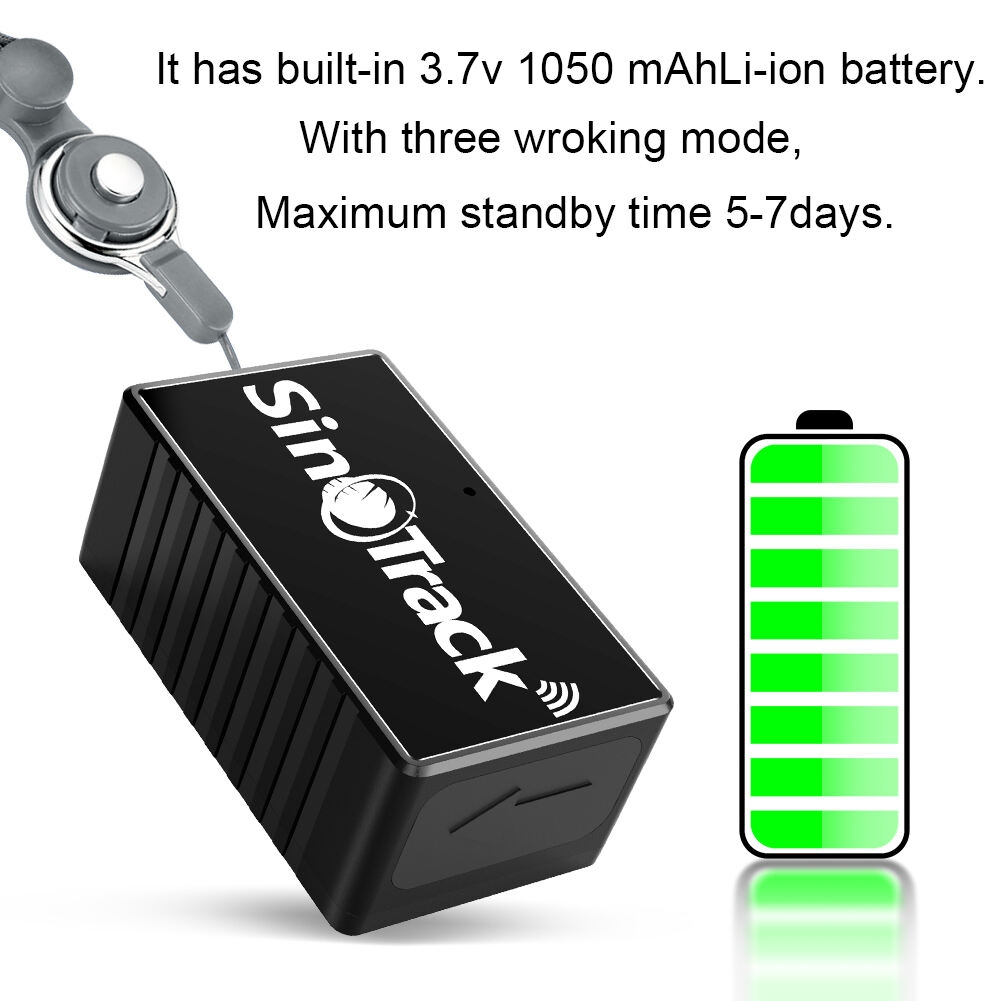
One of the defining trends of 2025 is the continued miniaturization of tracking hardware without any compromise on functionality. The mini gps tracker now delivers capabilities that would have required much larger hardware just five years ago. Chip-level innovations from the semiconductor industry have allowed manufacturers to pack multi-constellation GNSS receivers, cellular modems, motion sensors, backup batteries, and antenna arrays into enclosures no larger than a matchbox. This physical discretion matters enormously in real-world deployments where visibility of the tracking device may undermine its effectiveness.
Covert installation scenarios — such as embedding a mini gps tracker beneath dashboard panels, within door cavities, or behind bumpers — have become far more achievable with today's compact designs. For theft recovery applications, the device must remain hidden to be effective; a large, visible tracker is easily located and disabled by a vehicle thief. The miniaturization trend therefore directly enhances operational outcomes in personal vehicle protection, high-value asset monitoring, and rental fleet management.
Beyond concealment benefits, the smaller physical profile also simplifies legitimate vehicle integration. Fleet managers appreciate the ability to deploy a mini gps tracker across diverse vehicle types — motorcycles, passenger sedans, vans, trucks, and heavy equipment — using a single standardized device form factor. This uniformity reduces procurement complexity, simplifies maintenance protocols, and enables consistent data collection across heterogeneous fleets.
OBD-II Plug-In vs. Hardwired Installation Trends
The debate between OBD-II plug-and-play trackers and hardwired solutions continues in 2025, with both approaches finding their distinct niches. OBD-II based mini gps tracker devices offer undeniable convenience — no wiring expertise required, installation takes under a minute, and the device draws power directly from the vehicle's diagnostic port. For small business owners managing a handful of vehicles or individual users who frequently switch devices between cars, this approach offers flexibility that hardwired options cannot match.
However, hardwired installations remain the preferred choice for professional fleet deployments where device tampering resistance is a priority. A hardwired mini gps tracker connected to the vehicle's ignition circuit and backed up by an internal battery cannot be easily removed by an unauthorized driver. It also enables ignition state monitoring, allowing fleet management software to automatically log trips, calculate idle time, and trigger driver behavior alerts based on actual engine activity rather than motion detection alone. The trend in 2025 favors hybrid architectures that combine the data richness of hardwired connections with backup battery continuity for post-cutoff tracking.
Cloud Platform Integration and AI-Driven Analytics
Real-Time Dashboards and Remote Command Features
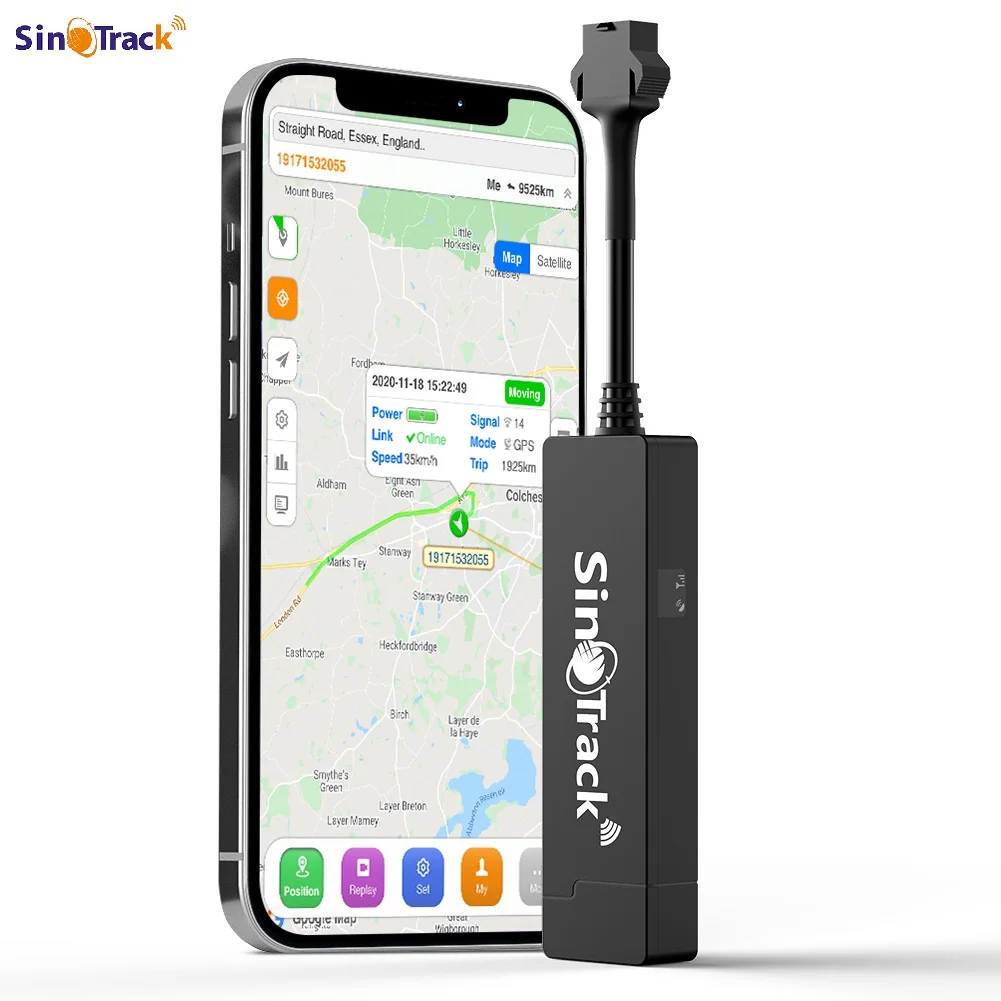
The hardware evolution of the mini gps tracker is inseparable from the software ecosystem that transforms raw location data into actionable intelligence. In 2025, cloud-based tracking platforms have matured to offer real-time dashboards that update vehicle positions dynamically on map interfaces, with customizable alert layers, geofence zones, and historical route replays accessible from any internet-connected device. The latency from device to dashboard has been reduced to the point where what operators see on their screens reflects physical vehicle positions with only negligible delay.
Remote command features have also become standard in premium mini gps tracker implementations. Fleet administrators can issue remote engine immobilization commands, request immediate location pings, adjust device reporting intervals remotely, or trigger SOS alerts — all from a centralized platform without any physical interaction with the vehicle. For stolen vehicle recovery scenarios, this command capability can be the decisive factor in asset retrieval. Insurance companies operating fleet risk programs have increasingly partnered with tracking platform providers to offer premium discounts tied to demonstrated real-time monitoring compliance.
AI and Predictive Fleet Intelligence
Artificial intelligence integration represents arguably the most consequential long-term trend intersecting with mini gps tracker technology. In 2025, AI algorithms are being applied to the continuous streams of telemetry data generated by vehicle trackers to surface predictive insights that go well beyond simple location awareness. Pattern recognition systems can identify driver behavior anomalies — hard braking events, rapid acceleration, excessive cornering — and flag them automatically for fleet safety reviews without requiring manual data analysis by dispatchers.
Predictive maintenance intelligence is another rapidly maturing application. By correlating GPS-derived mileage data, trip frequency patterns, and engine-on duration logs with historical service records, AI-powered platforms can generate remarkably accurate maintenance scheduling recommendations. A well-integrated mini gps tracker essentially becomes a passive vehicle health monitor, alerting fleet managers to service needs before they escalate into costly roadside breakdowns. For high-utilization commercial fleets where every unplanned downtime event carries significant financial consequences, this predictive capability delivers measurable return on investment.
Beyond maintenance, AI-driven route optimization uses live traffic data, historical congestion patterns, and real-time fleet position data from each mini gps tracker to dynamically reroute vehicles, reduce fuel consumption, and improve delivery time reliability. In 2025, these systems operate with a level of sophistication that makes static route planning look rudimentary by comparison. The competitive advantage for logistics operators who fully leverage this AI-GPS integration is substantial and growing.
Power Management and Extended Battery Life Innovations
Low-Power Modes and Energy Harvesting
One of the persistent engineering challenges in mini gps tracker design has been balancing continuous real-time reporting against battery longevity, particularly for non-wired deployments. In 2025, advances in low-power microprocessor architectures and intelligent duty-cycling algorithms have meaningfully extended standalone battery life. Modern devices can intelligently reduce their reporting frequency when motion sensors detect that a vehicle is stationary for extended periods, then automatically resume full-rate reporting when movement is detected. This adaptive behavior conserves battery energy during parking intervals without compromising tracking continuity during active journeys.
Some next-generation mini gps tracker designs are exploring energy harvesting techniques — capturing small amounts of mechanical energy from vehicle vibration or solar exposure through micro-panels integrated into the device casing. While these energy contributions are modest, they can meaningfully extend operational intervals between charging cycles for devices deployed in semi-permanent monitoring roles. Asset tracking applications where devices must remain operational for weeks without any maintenance intervention benefit directly from these innovations.
eSIM and Remote SIM Provisioning
The adoption of eSIM technology within the mini gps tracker ecosystem is another 2025 trend that carries significant operational implications. Traditional SIM-based trackers required physical SIM card management — sourcing country-specific SIMs for cross-border operations, managing multiple data plans, and physically accessing devices to swap SIMs when network conditions changed. eSIM eliminates these friction points entirely by enabling remote carrier provisioning. A fleet operator can switch their entire tracker network from one cellular carrier to another without any physical device interaction, simply by updating carrier profiles through a cloud management interface.
For multinational logistics operators managing assets across dozens of countries, this capability transforms SIM management from a persistent administrative burden into an automated background process. The mini gps tracker becomes network-agnostic, always connecting to the most cost-effective or highest-quality carrier available at any given location. This interoperability aligns naturally with the borderless nature of modern supply chains and positions eSIM-equipped trackers as the preferred hardware choice for enterprise-scale deployments in 2025 and beyond.
FAQ
What makes a mini gps tracker suitable for real-time vehicle tracking in 2025?
A suitable mini gps tracker for real-time vehicle tracking in 2025 should support multi-constellation GNSS for accurate positioning, offer 4G LTE or 5G cellular connectivity for fast data transmission, include motion-activated reporting to conserve battery life, and integrate with a reliable cloud platform that provides live dashboards and alert management. Devices with eSIM capability and backup battery support add further resilience for professional deployments.
How frequently does a mini gps tracker update location data in real-time mode?
Most modern mini gps tracker devices offer configurable update intervals, typically ranging from every 10 seconds to every 60 seconds during active vehicle movement. High-performance devices on 5G or 4G networks can achieve near-continuous updates with sub-10-second intervals. During stationary periods, intelligent power management systems reduce update frequency automatically to conserve energy, resuming rapid reporting as soon as movement is detected.
Can a mini gps tracker be used covertly for vehicle theft prevention?
Yes, the compact design of a mini gps tracker makes it well-suited for discreet installation in concealed vehicle locations such as under dashboards, within door panels, or behind bumpers. When installed covertly and connected to a backup battery, the device continues to transmit location data even if a thief disables the primary vehicle power. This persistent tracking capability is a major advantage for theft recovery scenarios, and many insurance providers recognize its value through adjusted premium structures.
How does AI integration enhance the value of a mini gps tracker fleet deployment?
AI integration transforms raw location and telemetry data from a mini gps tracker into actionable operational intelligence. AI algorithms analyze driving behavior patterns to generate safety scores, identify maintenance needs before they cause breakdowns, and optimize delivery routes based on real-time and historical traffic data. For fleet operators, these AI-powered insights convert the mini gps tracker from a simple location tool into a comprehensive fleet performance management asset that directly reduces costs and improves service reliability.
Table of Contents
- The Evolution of Real-Time Tracking Infrastructure
- Miniaturization and Hardwired vs. Plug-and-Play Designs
- Cloud Platform Integration and AI-Driven Analytics
- Power Management and Extended Battery Life Innovations
-
FAQ
- What makes a mini gps tracker suitable for real-time vehicle tracking in 2025?
- How frequently does a mini gps tracker update location data in real-time mode?
- Can a mini gps tracker be used covertly for vehicle theft prevention?
- How does AI integration enhance the value of a mini gps tracker fleet deployment?