
 EN
EN
Fleet managers and business owners have long wrestled with the challenge of monitoring vehicles efficiently, controlling operational costs, and ensuring driver accountability. For decades, traditional methods served as the only available options, but the arrival of gps vehicle tracking has fundamentally shifted expectations across industries. Understanding how these two approaches compare is no longer just an academic exercise — it is a critical business decision that directly affects profitability, safety, and scalability.
This comparison article breaks down the real-world differences between gps vehicle tracking and the traditional methods businesses relied upon before satellite-based technology became accessible and affordable. From data accuracy and real-time visibility to cost structures and administrative burden, each dimension reveals why so many organizations are making the transition — and why some still hesitate. Whether you manage a small delivery fleet or a large commercial operation, the insights here will help you evaluate both approaches with clarity.
What Traditional Vehicle Monitoring Methods Actually Involve
Paper-Based Logbooks and Manual Reporting
Before digital solutions existed, drivers were responsible for recording their own activity. Paper logbooks captured mileage, fuel usage, departure times, and arrival times — all entered manually at the discretion of the driver. This system placed enormous trust in individual accuracy and honesty, which created predictable vulnerabilities in data integrity.
Manual reporting is inherently reactive. Managers received information only after the fact, often reviewing logs at the end of a shift or workweek. By the time discrepancies were noticed, the operational damage — whether from detours, idling, or misuse — had already occurred. There was no mechanism to intervene in real time or reroute vehicles dynamically.
The administrative overhead of processing paper logs was also significant. Someone had to collect, review, and archive every record. In large fleets, this translated into hours of manual data entry each week, with errors compounding over time. Auditing fuel expenses or investigating an incident required sifting through stacks of handwritten records.
Phone Check-Ins and Radio Communication
Many fleet operators supplemented logbooks with scheduled phone check-ins or two-way radio communication. Drivers would contact dispatch at designated intervals to report their location and status. While this created more frequent touchpoints, it still depended entirely on human initiative and did not provide continuous visibility.
Radio systems worked reasonably well for short-range operations, but they required dedicated infrastructure, ongoing maintenance, and operators at both ends of the communication. Coverage gaps were common in rural or mountainous terrain. More critically, a driver who deviated from their route had no obligation to report it unless the dispatcher actively noticed a missed check-in.
Neither method provided the kind of verifiable, timestamped location data that modern fleet management demands. Disputes over delivery times, customer complaints about late arrivals, and insurance claims involving accidents were all much harder to resolve without objective records. This gap is precisely where gps vehicle tracking offers its most compelling advantage.
How GPS Vehicle Tracking Works in Practice
Real-Time Positioning and Continuous Data Streams
Gps vehicle tracking uses satellite signals combined with cellular networks to determine and transmit a vehicle's exact location at regular intervals — often every few seconds. The tracking device installed in the vehicle communicates this data to a cloud-based platform, where fleet managers can view live maps, route histories, speed logs, and behavioral reports from any connected device.
The accuracy of modern gps vehicle tracking systems is measured in meters rather than approximate zones. This precision makes it possible to verify whether a driver arrived at the correct address, how long they spent at each stop, and whether the vehicle traveled only on authorized routes. Unlike phone check-ins, this data is generated automatically without requiring any action from the driver.
For businesses that operate vehicles around the clock or across large geographic areas, continuous data availability transforms how decisions are made. Dispatchers can reroute drivers based on traffic conditions in real time. Managers can set geofences — virtual boundaries — that trigger automatic alerts when a vehicle enters or exits a defined area. The operational intelligence generated by gps vehicle tracking simply cannot be replicated manually.
Hardware Integration and Device Capabilities
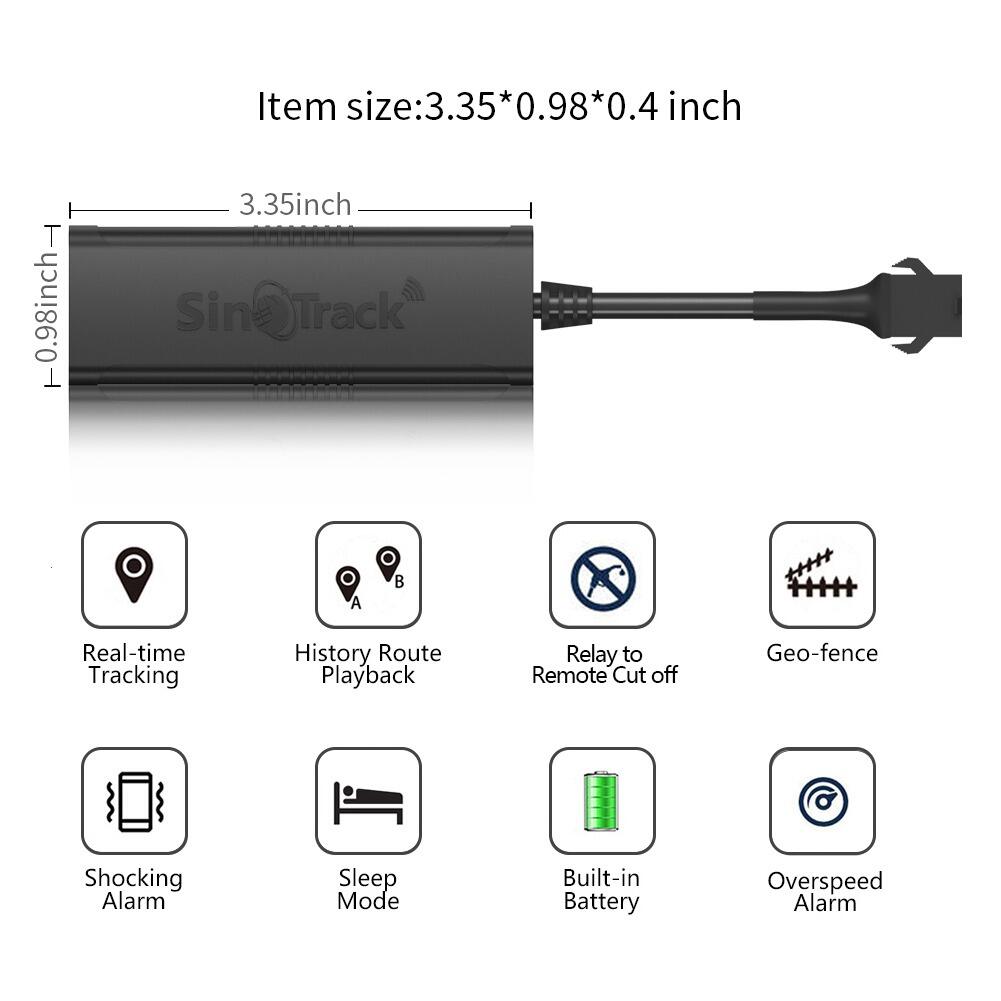
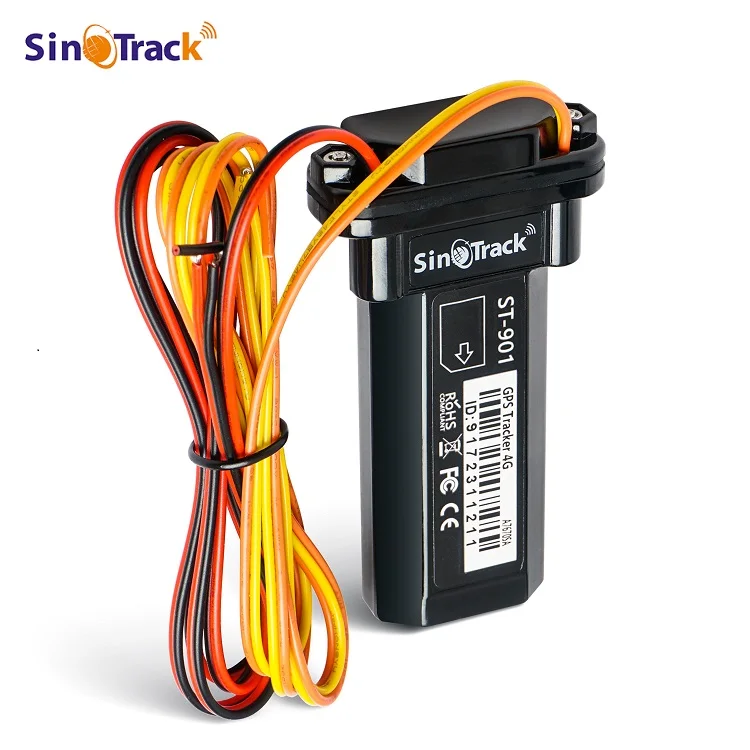
Modern gps vehicle tracking devices are compact, durable, and designed to integrate with a vehicle's electrical system. Hardwired units connect directly to the vehicle's power supply, ensuring continuous operation without battery concerns. Some models, such as the gps vehicle tracking device from SinoTrack, support relay functions that allow remote engine immobilization — a capability that has no equivalent in traditional monitoring methods.
Advanced devices also record additional data points beyond location, including speed, acceleration, harsh braking events, and engine status. This multi-dimensional data enables driver behavior scoring, which supports both safety improvement programs and insurance negotiations. The device works in conjunction with a free app, making the data accessible without expensive proprietary software investments.
Installation of a gps vehicle tracking unit is typically straightforward and does not require significant vehicle downtime. Once installed, the system operates passively in the background, generating a continuous stream of actionable intelligence. Compared to the daily effort required to collect and verify manual logs, the operational efficiency gain is immediately apparent.
Accuracy, Accountability, and Data Reliability
The Reliability Gap Between the Two Approaches
One of the most significant differences between gps vehicle tracking and traditional methods is data reliability. Satellite-based tracking records objective facts — coordinates, timestamps, speeds — that cannot be altered retroactively by a driver or dispatcher. This creates an audit trail that is legally defensible and operationally trustworthy.
Traditional methods, by contrast, are only as reliable as the people filling out the forms or making the calls. Studies across logistics and field service industries consistently show that manual reporting inflates productive hours and underreports idle time. The financial impact of this discrepancy accumulates quietly over months and years, affecting fuel costs, labor expenses, and customer satisfaction simultaneously.
For organizations that operate under regulatory compliance requirements — such as transportation companies subject to hours-of-service rules — the unreliability of manual records presents legal risk. Gps vehicle tracking eliminates ambiguity by providing verified, time-stamped data that satisfies auditor requirements without requiring additional documentation effort.
Driver Accountability and Behavioral Insights
When drivers know their vehicles are equipped with gps vehicle tracking, behavior typically improves. Speeding incidents decline, unauthorized stops decrease, and route adherence improves. This behavioral shift is not primarily about surveillance — it is about creating a culture of accountability that benefits both the business and the drivers themselves.
Traditional methods offered no comparable mechanism for behavioral feedback. A driver who habitually idled for extended periods or took longer routes to extend their work hours had little incentive to change, because the data to challenge their behavior simply did not exist. With gps vehicle tracking, managers can identify patterns, have evidence-based conversations, and implement targeted training programs.
Furthermore, gps vehicle tracking data can protect drivers from unfair accusations. If a customer claims a delivery was never made, the system's route history can verify the driver's account instantly. This two-way accountability builds trust between management and drivers, which is particularly valuable in high-turnover industries.
Cost Comparison and Return on Investment
The Hidden Costs of Traditional Methods
Traditional fleet monitoring appears cost-free at first glance because it requires no technology investment. However, the hidden costs are substantial and widely underestimated. Administrative labor for processing paper records, fuel wasted on unauthorized detours, maintenance intervals missed due to inaccurate mileage reporting, and insurance premiums uninformed by behavioral data all add up significantly over time.
Vehicle theft recovery is perhaps the starkest example of this cost gap. Without gps vehicle tracking, a stolen vehicle is reported to police with minimal supporting information. Recovery rates without tracking technology are significantly lower than those for tracked vehicles, where real-time location data allows rapid response. The cost of even a single unrecovered commercial vehicle can far exceed years of tracking subscription fees.
Dispute resolution is another hidden cost driver. Without objective location and timestamp records, resolving customer complaints, insurance claims, or internal disciplinary matters requires time-consuming investigation with inconclusive outcomes. Gps vehicle tracking compresses this process dramatically, freeing management time for productive tasks.
Evaluating the Investment in GPS Technology
The upfront cost of gps vehicle tracking hardware has decreased substantially as the technology has matured. Devices are available at accessible price points, and subscription-based platform costs are scalable — businesses pay according to fleet size and feature requirements. For most commercial operations, the tracking investment pays for itself within the first year through fuel savings and labor efficiency gains alone.
Insurance providers in many markets offer premium discounts to fleets using certified gps vehicle tracking systems, recognizing the reduced risk profile associated with monitored vehicles. Combined with improved maintenance scheduling — made possible by accurate mileage and engine-hour data — the total cost of fleet ownership declines measurably once tracking is implemented.
Scalability is also a financial advantage worth noting. As a business grows and adds vehicles to its fleet, gps vehicle tracking scales without proportional increases in administrative overhead. Traditional methods scale linearly — more vehicles simply mean more paperwork and more phone calls — while tracking systems centralize the data regardless of fleet size.
Operational Scenarios Where the Comparison Becomes Clear
Urban Delivery and Last-Mile Logistics
In dense urban environments where delivery windows are tight and customer expectations are high, gps vehicle tracking provides operational advantages that traditional methods cannot approach. Live traffic data integration, dynamic rerouting, and proof-of-delivery timestamping are all capabilities that depend on real-time location data. A delivery company relying on paper logs and phone check-ins operates with a significant competitive disadvantage in this environment.
Customer communication is also transformed by gps vehicle tracking. Businesses can provide accurate estimated arrival times derived from actual vehicle location, rather than estimates based on scheduled departure times. This level of service visibility has become an expectation rather than a differentiator in many logistics markets.
Field Service Operations and Remote Workforces
For businesses that dispatch technicians or service personnel to client sites, gps vehicle tracking closes the visibility gap that traditionally existed between office and field. Dispatchers can assign the nearest available vehicle to an urgent job rather than calling around to find someone who might be close. Response times improve, customer satisfaction increases, and fuel consumption decreases — all from a single technology investment.
In remote or rural service areas, traditional communication methods like radio have obvious range limitations. Gps vehicle tracking systems that operate over cellular networks maintain visibility as long as network coverage exists, and some advanced units also support satellite fallback for truly remote environments. This reliability makes gps vehicle tracking the only viable choice for operations that regularly send vehicles beyond radio range.
FAQ
Is GPS vehicle tracking suitable for small fleets or individual business vehicles?
Yes, gps vehicle tracking is highly suitable for small fleets and even single-vehicle operations. The cost of hardware and subscription services has decreased significantly, making it accessible for sole traders and small businesses. The benefits of fuel monitoring, route verification, and theft recovery apply equally regardless of fleet size.
How does GPS vehicle tracking handle areas with poor cellular coverage?
Most gps vehicle tracking devices store location data locally when cellular connectivity is unavailable and then transmit the cached data once a signal is restored. This means coverage gaps do not create permanent blind spots in the route history. Some advanced units also support multiple network bands to maximize connectivity in low-coverage areas.
Can GPS vehicle tracking data be used as legal evidence in disputes or incidents?
Yes, the timestamped and coordinate-verified data generated by gps vehicle tracking systems is generally accepted as objective evidence in insurance claims, employment disputes, and legal proceedings. Because the data is generated automatically by satellite positioning rather than human entry, it carries significantly more evidentiary weight than manual logs or driver testimony alone.
What is the typical installation process for a GPS vehicle tracking device?
Most hardwired gps vehicle tracking devices are installed by connecting to the vehicle's power supply, typically via a fuse box or directly to the battery. The process usually takes under an hour per vehicle and does not require specialized automotive knowledge for straightforward installations. Devices that support relay functions for remote immobilization may require connection to the ignition circuit as well.
Table of Contents
- What Traditional Vehicle Monitoring Methods Actually Involve
- How GPS Vehicle Tracking Works in Practice
- Accuracy, Accountability, and Data Reliability
- Cost Comparison and Return on Investment
- Operational Scenarios Where the Comparison Becomes Clear
-
FAQ
- Is GPS vehicle tracking suitable for small fleets or individual business vehicles?
- How does GPS vehicle tracking handle areas with poor cellular coverage?
- Can GPS vehicle tracking data be used as legal evidence in disputes or incidents?
- What is the typical installation process for a GPS vehicle tracking device?