 EN
EN
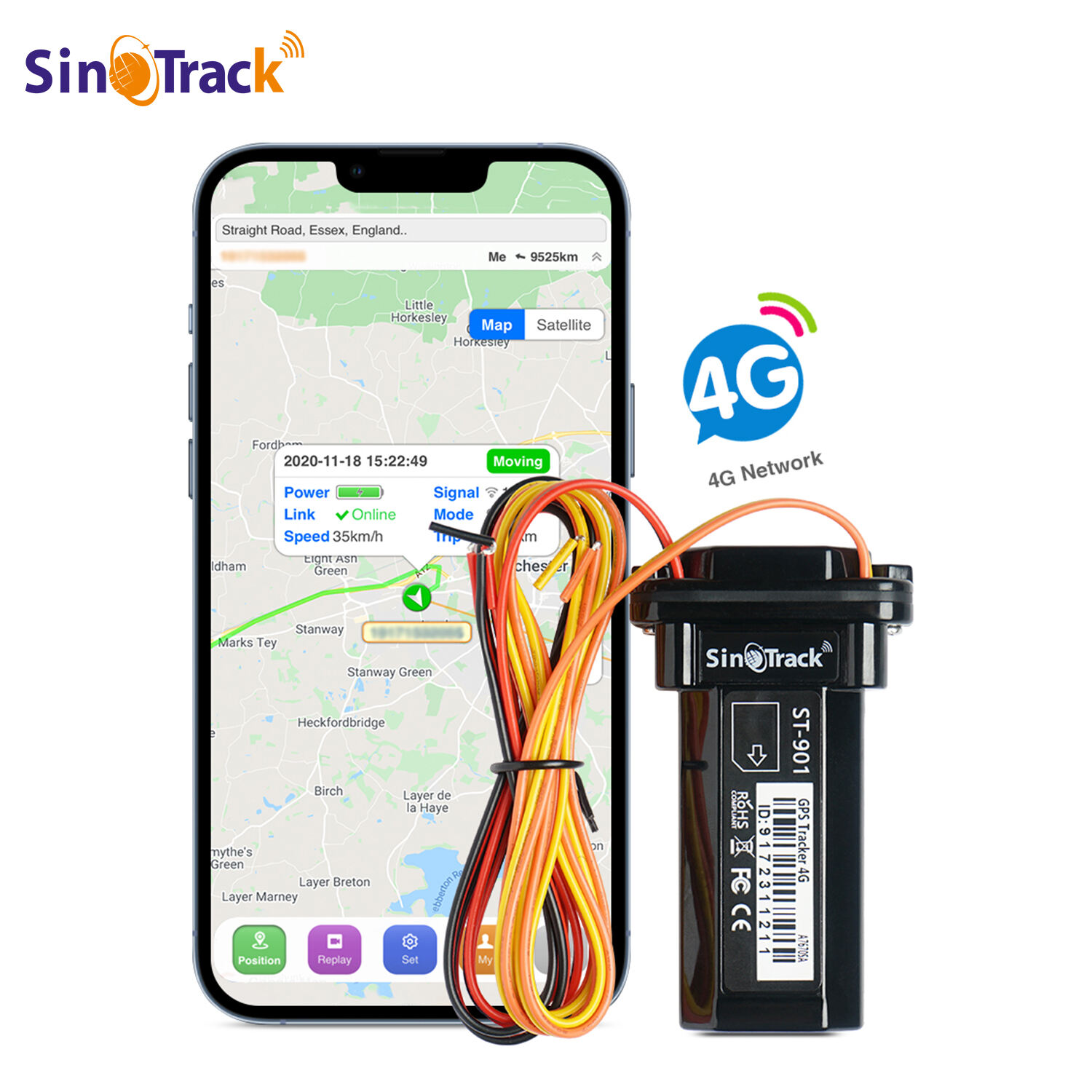
Modern vehicle tracking has evolved far beyond simple location logging. Today, a 4g gps tracker combines satellite-based positioning with fourth-generation cellular networks to deliver real-time, high-accuracy location data to fleet managers, vehicle owners, and logistics operators around the world. Understanding how this technology actually works — from signal acquisition to data transmission — gives businesses the clarity they need to deploy tracking solutions with confidence.
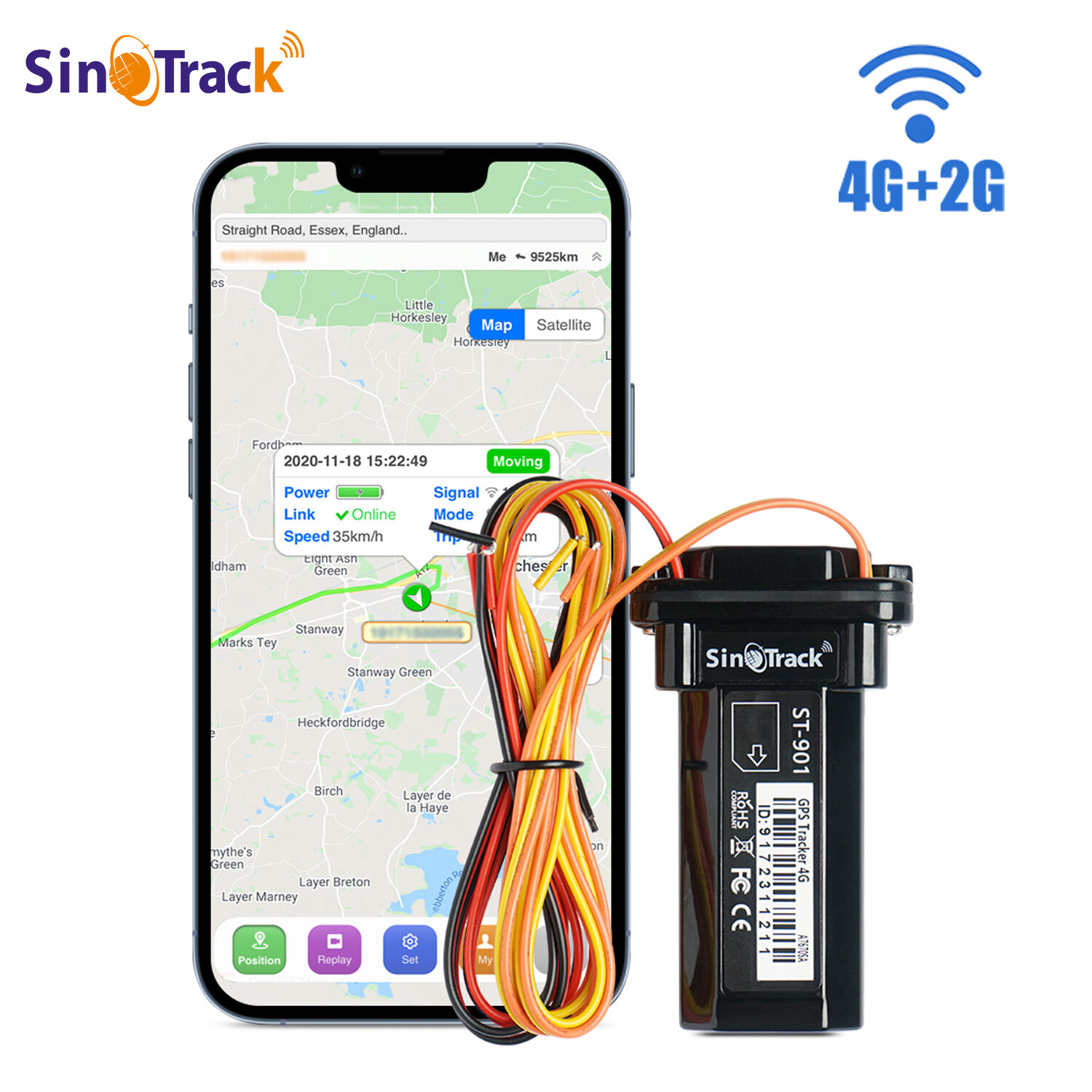
A 4g gps tracker is not simply a GPS chip with a SIM card attached. It is a purpose-built device that integrates multiple hardware and software components, each playing a specific role in the overall tracking workflow. From the moment the device powers on to the instant a position update appears on a monitoring platform, a sophisticated sequence of operations takes place. This article breaks down that sequence, explaining the underlying technology at each stage so you can fully understand what makes a 4g gps tracker perform the way it does.
The Two Core Technologies Inside a 4G GPS Tracker
GPS Satellite Positioning
The first core technology in any 4g gps tracker is the Global Positioning System, commonly known as GPS. The device contains a dedicated GPS receiver chip that continuously listens for signals broadcast by a constellation of satellites orbiting the Earth. These satellites transmit precisely timed radio signals, and by receiving signals from at least four satellites simultaneously, the GPS receiver can calculate its exact position through a process called trilateration.
Trilateration works by measuring the time it takes for each satellite signal to reach the receiver. Since the signals travel at the speed of light and each satellite broadcasts its exact orbital position, the receiver can calculate the distance to each satellite. Cross-referencing three or more of these distance measurements pinpoints the device's latitude, longitude, and altitude on the Earth's surface. A quality 4g gps tracker typically achieves positioning accuracy within two to five meters under open-sky conditions.
Modern 4g gps tracker devices often support multiple satellite systems beyond GPS alone. Many units are compatible with GLONASS, the Russian satellite network, as well as BeiDou from China and Galileo from Europe. Multi-constellation support increases the number of available satellites, which improves accuracy and reduces the time required to acquire an initial fix — a metric known as Time to First Fix, or TTFF.
4G LTE Cellular Communication
Once the device knows its position, it needs a way to transmit that data to a remote server. This is where the '4G' in '4g gps tracker' becomes critical. The device contains a cellular modem that connects to 4G LTE networks in the same way a smartphone connects to mobile data. The LTE standard provides substantially higher bandwidth and lower latency compared to older 2G or 3G networks, which were commonly used in earlier generations of vehicle trackers.
With 4G LTE connectivity, a 4g gps tracker can push location updates to a cloud server in near real-time — often with intervals as short as a few seconds. The higher data throughput also enables richer telemetry beyond basic coordinates. A 4g gps tracker on a modern LTE network can transmit speed data, heading information, ignition status, fuel sensor readings, door alerts, and driver behavior metrics all within the same data packet, without adding meaningful latency to the system.
The cellular modem in a 4g gps tracker requires a SIM card to authenticate with the mobile network. Most industrial-grade units support standard, micro, or nano SIM formats, and some advanced models integrate an eSIM that can switch between carriers automatically based on signal availability. This carrier flexibility is particularly valuable for fleet operators whose vehicles cross regional or national boundaries.
How the Tracking Data Flows From Device to Platform
Data Packaging and Protocol Transmission
When a 4g gps tracker calculates a new position fix, its internal microcontroller bundles that data into a structured packet. This packet follows a specific communication protocol — a standardized format that the receiving server knows how to parse. Common protocols used by professional 4g gps tracker devices include GT06, JT808, and proprietary formats developed by device manufacturers. The protocol defines what data fields are included, in what order, and how the packet is validated for integrity.
The packet typically includes a device identifier, timestamp, GPS coordinates, speed, heading, signal quality indicators, and a set of status flags reflecting the vehicle's current condition. Once assembled, the microcontroller passes the packet to the cellular modem, which transmits it over the 4G LTE network to a designated server IP address and port. The transmission happens over TCP or UDP protocols depending on the device configuration and the reliability requirements of the application.
TCP transmission provides confirmation that each packet was received by the server, making it preferred for applications where data completeness is critical. UDP offers faster delivery with less overhead, which is useful when tracking high volumes of vehicles at short intervals. A well-designed 4g gps tracker allows operators to configure the transmission protocol based on their specific use case.
Cloud Server Processing and Storage
Once the data packet reaches the cloud server, a backend application decodes it according to the relevant protocol and stores the extracted data in a database. From this point forward, the location history is permanently recorded and can be retrieved for replay, reporting, or compliance audits. The server also compares incoming data against configured rules — such as geofence boundaries, speed limits, or scheduled operating hours — and triggers alerts when violations are detected.
Modern 4g gps tracker platforms use scalable cloud infrastructure to handle the continuous streams of data flowing in from potentially thousands of devices simultaneously. The cloud layer also provides redundancy, meaning that if one server node experiences a failure, the workload shifts automatically to a backup node without data loss. This architecture is what enables enterprise fleet managers to monitor hundreds of vehicles in real time from a single web dashboard or mobile application.
Key Hardware Components That Enable the Workflow
Internal Antenna Design
A 4g gps tracker contains at least two distinct antennas: one dedicated to GPS signal reception and one for cellular transmission. The GPS antenna is a passive or active component tuned to the 1575.42 MHz frequency band used by the GPS satellite system. Active antennas include a low-noise amplifier that boosts weak satellite signals, which improves performance when the device is installed in locations with partial signal obstruction, such as under a vehicle dashboard or inside a metal enclosure.
The cellular antenna must cover the full frequency range used by 4G LTE bands in the operating region. Because LTE bands vary between regions and carriers, industrial-grade 4g gps tracker devices are often designed with broadband antennas that cover bands from 700 MHz to 2600 MHz. This broadband design ensures reliable connectivity regardless of which carrier or frequency band the device connects to in any given location.
Power Management and Backup Battery
Vehicle trackers typically draw power from the vehicle's own electrical system, connecting to a 12V or 24V supply through a hardwired harness. The internal circuitry of a 4g gps tracker includes a voltage regulator that steps the vehicle supply voltage down to the safe operating levels required by the GPS receiver, cellular modem, and microcontroller. Proper voltage regulation also protects the device from electrical spikes caused by engine cranking or alternator fluctuations.
Many 4g gps tracker devices include a small internal backup battery. This battery serves two purposes. First, it allows the device to maintain its GPS almanac data and real-time clock even when the vehicle's ignition is off and the main power connection is idle, which dramatically reduces TTFF when the vehicle is restarted. Second, if the main power wire is tampered with or cut, the backup battery allows the device to transmit a tamper alert and continue reporting for a limited period, preserving asset security during theft attempts.
Advanced Features Enabled by 4G Connectivity
Two-Way Communication and Remote Commands
One of the most operationally significant advantages of a 4g gps tracker over older network variants is the ability to support two-way communication at scale. Because 4G LTE provides a persistent and high-bandwidth connection, the server can push commands back to the device at any time, not just when the device initiates contact. This enables fleet managers to send remote instructions such as immobilization commands, configuration updates, or firmware upgrades over the air without physically accessing the device.
Remote immobilization is particularly valued in vehicle finance and rental industries. When a 4g gps tracker is connected to the vehicle's ignition relay, an authorized operator can send a command from the platform that cuts the engine start circuit, preventing the vehicle from being driven until the command is reversed. This feature requires the low latency of 4G connectivity to function reliably — a command that takes ten or twenty seconds to reach the device on a slow network is not practical in an operational environment.
Real-Time Alerts and Geofencing Logic
Geofencing is one of the most widely used features built on top of the 4g gps tracker infrastructure. Operators define virtual geographic boundaries within the tracking platform, and the system continuously compares the device's reported coordinates against those boundaries. When the device enters or exits a defined zone, the platform generates an immediate alert — typically delivered by SMS, push notification, or email — enabling rapid response to unauthorized movement or route deviations.
Beyond geofencing, a 4g gps tracker platform can generate alerts based on speed thresholds, harsh braking events detected through internal accelerometers, prolonged idling, unexpected towing, or ignition on and off events. The richness of these alerts is directly tied to the sensor capabilities of the device itself and the quality of the data link connecting it to the server. With 4G connectivity, these alerts can arrive within seconds of the triggering event, making the information actionable rather than historical.
FAQ
What is the difference between a 2G and a 4G GPS tracker?
A 2G gps tracker uses older GSM cellular networks to transmit data, which results in slower update rates, higher latency, and limited data capacity compared to a 4g gps tracker. The 4G LTE network provides significantly faster data transmission, lower response times, and supports richer telemetry features such as real-time video, voice, and two-way communication. As many mobile carriers continue to phase out 2G networks globally, a 4g gps tracker also offers much better long-term network compatibility.
How accurate is a 4G GPS tracker in urban environments?
In open environments, a quality 4g gps tracker typically delivers accuracy within two to five meters. In dense urban areas with tall buildings, accuracy can be affected by a phenomenon called multipath interference, where satellite signals bounce off structures before reaching the device. However, most modern 4g gps tracker units mitigate this through multi-constellation support, which increases the number of available satellites and reduces the impact of multipath errors. Assisted GPS technology, which uses the cellular network to speed up satellite acquisition, also improves urban performance.
Does a 4G GPS tracker require a monthly subscription?
Yes, in most cases a 4g gps tracker requires an active SIM card with a data plan to transmit location data over the cellular network. The cost and structure of this plan varies depending on the carrier, the device's data consumption, and the tracking platform used. Some platforms include data connectivity as part of their service subscription, while others require a separate SIM arrangement. The tracking platform itself may also carry a monthly or annual software subscription fee depending on the features and number of devices managed.
Can a 4G GPS tracker work in areas with poor cellular coverage?
A 4g gps tracker still acquires GPS position data regardless of cellular signal availability — the satellite reception component operates independently of the cellular network. However, the device cannot transmit that position data to the server in real time if there is no cellular coverage. In such situations, a well-designed 4g gps tracker stores the position logs internally and uploads them in bulk once the vehicle re-enters a coverage area. This store-and-forward capability ensures no tracking data is permanently lost even when operating in remote regions.