
 EN
EN
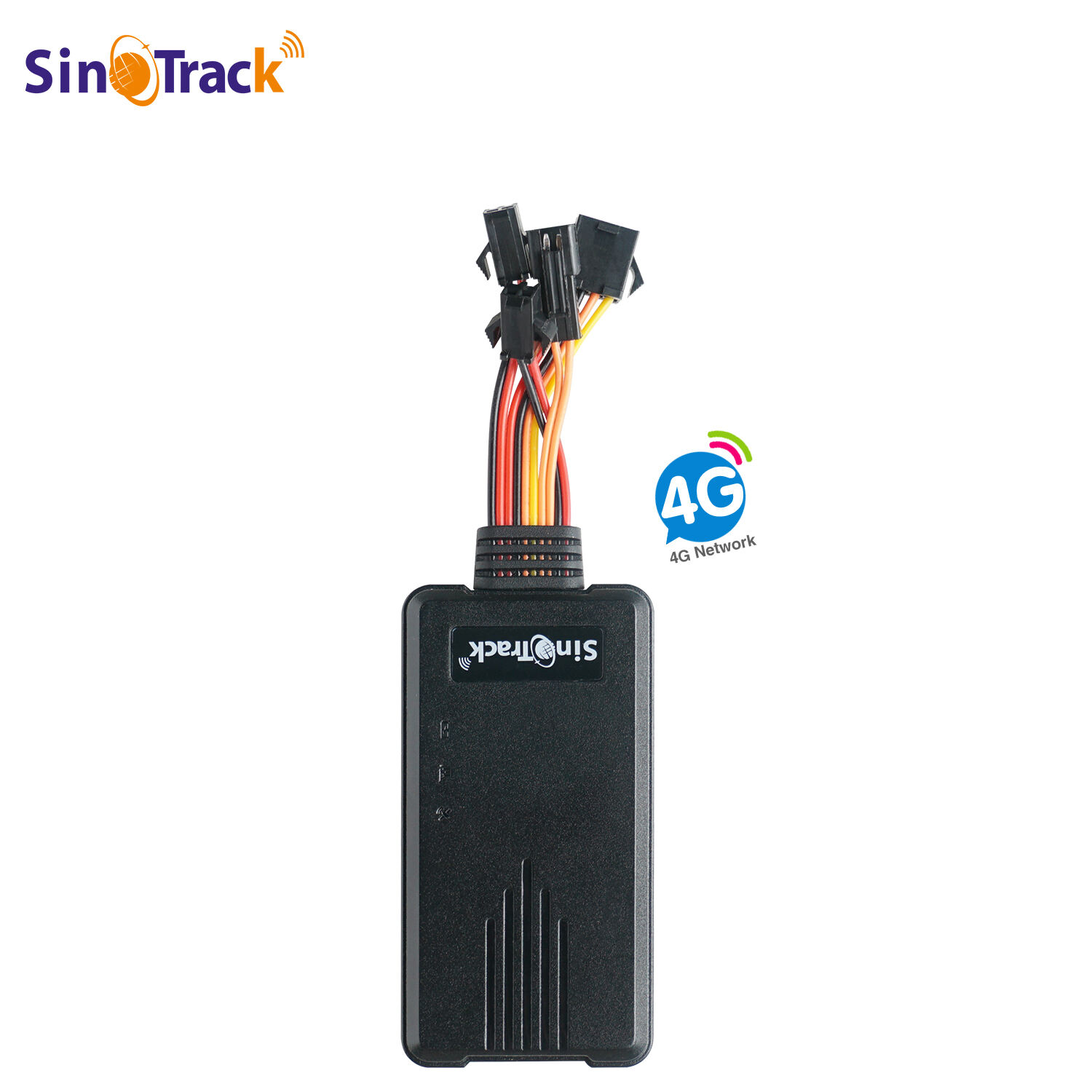
Choosing the right 4g gps tracker in 2025 is no longer a simple task. The market has expanded dramatically, with devices ranging from compact motorcycle units to heavy-duty fleet trackers, each offering a different combination of network support, battery life, and platform integration. Whether you are managing a commercial fleet, protecting a personal vehicle, or securing high-value assets, understanding what separates a capable 4g gps tracker from an underperforming one is the foundation of a smart purchase decision.
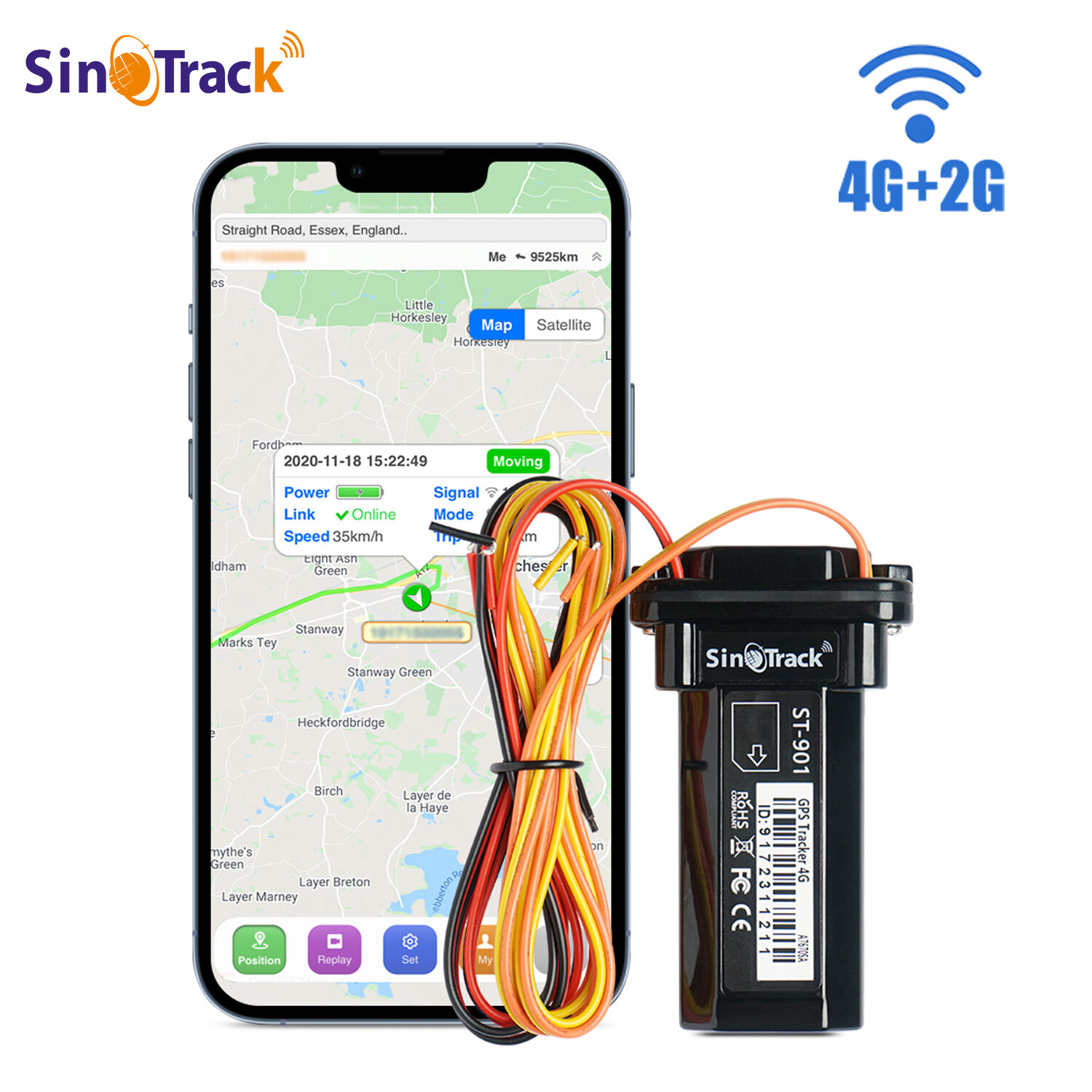
This complete buying guide walks you through every critical factor you need to evaluate before investing in a 4g gps tracker in 2025. From network compatibility and hardware design to software features and installation requirements, each section is built to give you decision-useful insight rather than generic product descriptions. By the end, you will have a clear framework for identifying which 4g gps tracker best fits your specific use case, budget, and operational environment.
Why 4G Network Support Matters for GPS Tracking in 2025
The Shift Away from 2G and 3G Infrastructure
One of the most important reasons to prioritize a 4g gps tracker in 2025 is the ongoing global shutdown of legacy 2G and 3G networks. Telecom carriers across North America, Europe, Australia, and large parts of Asia have already decommissioned or are actively phasing out these older networks. A tracker that still relies on 2G or 3G connectivity is not just slower — it is at risk of becoming completely non-functional in regions where those networks no longer exist.
A 4g gps tracker operates on LTE infrastructure, which remains the dominant cellular standard worldwide and is supported by virtually every major carrier. This means your device will continue to transmit location data reliably without the risk of network obsolescence in the near term. For businesses managing assets across multiple countries or regions, this network stability is not a luxury — it is a baseline requirement.
Investing in a 4g gps tracker today also future-proofs your tracking infrastructure. As 5G networks expand, many 4G LTE devices are designed to remain compatible with carrier aggregation and backward-compatible 5G deployments, extending the useful life of your hardware investment significantly.
Speed, Latency, and Real-Time Accuracy
Beyond network availability, 4G LTE delivers substantially lower latency compared to older standards. For a 4g gps tracker, this translates directly into faster location updates, more responsive geofence alerts, and more accurate real-time tracking on monitoring platforms. When a vehicle crosses a geofence boundary or an asset is moved without authorization, the speed at which that alert reaches you can make a meaningful operational difference.
In high-density urban environments where signal congestion is common, a 4g gps tracker maintains more stable data transmission than 2G alternatives. This is particularly relevant for last-mile delivery fleets, urban ride-share operations, and any application where continuous, uninterrupted location visibility is critical to daily operations.
Key Hardware Features to Evaluate in a 4G GPS Tracker
Form Factor and Installation Method
The physical design of a 4g gps tracker directly affects how and where it can be deployed. Hardwired trackers connect directly to a vehicle's power supply, offering continuous operation without battery concerns and enabling access to vehicle data such as ignition status, engine diagnostics, and fuel consumption. These are typically preferred for fleet vehicles, commercial trucks, and any asset that remains in regular use.
Compact, battery-powered 4g gps tracker units offer greater flexibility for assets that do not have a permanent power source — such as trailers, containers, construction equipment, or personal vehicles where discreet placement is a priority. The trade-off is battery management: you need to evaluate the device's power consumption mode, sleep intervals, and expected battery life under your specific reporting frequency requirements.
Motorcycle-specific 4g gps tracker models, such as compact units designed for two-wheelers, are engineered with waterproofing, vibration resistance, and minimal footprint in mind. These design considerations are not cosmetic — they directly affect device longevity and reliability in demanding outdoor conditions.
GPS Chipset Quality and Positioning Accuracy
Not all GPS chipsets perform equally. A high-quality 4g gps tracker will use a chipset that supports multiple satellite constellations — including GPS, GLONASS, Galileo, and BeiDou — to achieve faster signal acquisition and more accurate positioning across diverse geographic environments. Single-constellation devices may struggle in areas with limited satellite visibility, such as dense urban canyons or heavily forested regions.
Positioning accuracy is typically measured in meters under open-sky conditions, but real-world performance depends heavily on chipset sensitivity, antenna design, and the device's ability to maintain a lock during movement. When evaluating a 4g gps tracker, look for specifications that indicate cold start time, hot start time, and tracking sensitivity in dBm — these figures give you a more honest picture of field performance than marketing language alone.
Some advanced 4g gps tracker models also incorporate accelerometers and gyroscopes to provide dead reckoning capability. This means the device can estimate position using motion data when satellite signals are temporarily lost — such as inside tunnels or underground parking structures — and resume accurate tracking once the signal is restored.
Software Platform and Feature Set Considerations
Tracking Platform Compatibility and Data Access
The hardware of a 4g gps tracker is only as useful as the software platform it connects to. Most modern trackers transmit data using standard protocols such as MQTT or proprietary TCP formats, and they are compatible with a range of third-party fleet management platforms. Before purchasing, confirm whether the device supports open protocol integration or is locked to a proprietary platform — this affects your long-term flexibility and total cost of ownership.
A capable tracking platform should offer real-time map visualization, historical route playback, geofence creation and alerting, speed monitoring, and report generation. For fleet operators, additional features such as driver behavior scoring, maintenance scheduling, and multi-user access control add significant operational value. Evaluate whether the platform is accessible via both web browser and mobile application, as field managers often need mobile access during operations.
Data retention policies also matter. Some platforms store historical tracking data for 30 days, while others offer extended archives. If your use case involves compliance reporting, insurance documentation, or incident investigation, longer data retention is a meaningful differentiator when selecting a 4g gps tracker ecosystem.
Alert Types and Automation Capabilities
A well-configured 4g gps tracker should support a comprehensive set of automated alerts delivered via SMS, email, or push notification. Standard alert types include geofence entry and exit, speeding, harsh braking, unauthorized movement, power disconnection, and low battery. Each of these serves a specific operational or security function, and the ability to configure thresholds and notification recipients gives fleet managers precise control over their monitoring environment.
More advanced 4g gps tracker platforms support rule-based automation — for example, automatically locking a vehicle remotely when it exits a defined zone outside of business hours, or triggering a maintenance alert when a vehicle exceeds a set mileage threshold. These automation capabilities reduce manual monitoring workload and allow smaller teams to manage larger asset pools effectively.
Practical Buying Criteria for Different Use Cases
Fleet and Commercial Vehicle Applications
For fleet operators, the primary criteria when selecting a 4g gps tracker center on scalability, platform integration, and total cost of ownership. A device that works well for a single vehicle must also perform consistently across dozens or hundreds of units deployed across different regions and vehicle types. Evaluate whether the supplier offers volume pricing, centralized SIM management, and dedicated technical support for enterprise deployments.
Hardwired 4g gps tracker units with OBD or direct-wire installation are generally preferred for commercial fleets because they provide continuous power, access to vehicle diagnostics, and tamper resistance. The ability to monitor ignition state, engine hours, and fuel levels through a single 4g gps tracker device reduces the need for additional hardware and simplifies data management across the fleet.
Compliance requirements are another consideration for commercial operators. In some jurisdictions, electronic logging and vehicle tracking are legally mandated for certain vehicle categories. Ensure that the 4g gps tracker you select meets the data format and reporting standards required by relevant transport authorities in your operating region.
Personal Vehicle and Motorcycle Protection
For individual vehicle owners and motorcycle riders, the buying criteria for a 4g gps tracker shift toward compact size, discreet installation, ease of use, and responsive theft recovery features. A small, waterproof 4g gps tracker that can be concealed within a motorcycle frame or under a vehicle dashboard provides anti-theft protection without drawing attention to its presence.
Real-time tracking with instant movement alerts is the core feature for personal security applications. When a vehicle is moved without the owner's knowledge, the 4g gps tracker should immediately send a notification and begin transmitting live location updates at a high refresh rate to support rapid recovery. Some devices also support remote immobilization, allowing the owner or a monitoring center to disable the vehicle's ignition remotely.
Subscription cost is a more prominent consideration for individual users than for fleet operators. Evaluate the monthly or annual platform fee alongside the hardware cost to understand the true total cost of ownership over a two- to three-year period. A low-cost 4g gps tracker with a high subscription fee may ultimately cost more than a mid-range device with a more competitive service plan.
Installation, SIM Card, and Ongoing Maintenance
SIM Card Requirements and Network Coverage
Every 4g gps tracker requires an active SIM card to transmit data over the cellular network. Some devices come with a built-in eSIM or a pre-activated SIM card tied to a specific platform subscription, while others require you to source and activate your own SIM from a local carrier. Understanding this distinction before purchase prevents unexpected setup delays and ensures you select a device compatible with the carriers available in your operating region.
For international deployments, look for a 4g gps tracker that supports multi-band LTE — specifically bands that cover the frequency ranges used by carriers in your target countries. A device optimized for North American LTE bands may not perform reliably in Europe or Southeast Asia without multi-band support. Roaming-capable SIM cards or global IoT SIM solutions can simplify multi-country deployments significantly.
Data consumption for a typical 4g gps tracker is relatively low — most devices transmit only small packets of location and status data — so a low-data IoT SIM plan is usually sufficient. However, if your device also transmits video, audio, or large diagnostic data sets, you will need to account for higher data usage in your SIM plan selection.
Installation Best Practices and Long-Term Reliability
Proper installation is critical to the long-term reliability of any 4g gps tracker. For hardwired units, connections should be made to a stable, fused power source with correct polarity, and all wiring should be routed away from heat sources and moving parts. Poor installation is one of the most common causes of intermittent device failures and inaccurate data in fleet tracking deployments.
For battery-powered 4g gps tracker units, placement affects both GPS signal reception and cellular connectivity. Avoid installing the device inside metal enclosures or beneath thick metal panels, as these materials can significantly attenuate both GPS and LTE signals. Positioning the device with a clear line of sight to the sky — even through plastic or glass — will yield the best positioning and communication performance.
Firmware updates are an often-overlooked aspect of 4g gps tracker maintenance. Reputable manufacturers release periodic firmware updates that improve positioning algorithms, fix connectivity bugs, and add new platform features. Ensure that the device you select supports over-the-air firmware updates so that improvements can be applied remotely without requiring physical access to each unit.
FAQ
What is the difference between a 4G GPS tracker and a 2G GPS tracker?
A 4g gps tracker uses LTE cellular networks to transmit location data, offering faster updates, lower latency, and broader network availability compared to a 2G GPS tracker. With 2G networks being shut down in many countries, a 4g gps tracker provides significantly better long-term reliability and is the recommended choice for any new deployment in 2025.
How often does a 4G GPS tracker update its location?
Most 4g gps tracker devices allow you to configure the reporting interval, which can range from every few seconds in real-time mode to every few minutes in power-saving mode. The optimal interval depends on your use case — fleet vehicles typically use 10 to 30-second intervals, while asset trackers on low-power deployments may report every few minutes to extend battery life.
Can a 4G GPS tracker work internationally?
Yes, a 4g gps tracker can work internationally if it supports the LTE frequency bands used by carriers in the target countries and is paired with a roaming-capable or global IoT SIM card. Always verify band compatibility before deploying a 4g gps tracker outside its primary market, as LTE band configurations vary significantly between regions.
Is a subscription required to use a 4G GPS tracker?
Most 4g gps tracker devices require an ongoing subscription to cover SIM data costs and access to the tracking platform. Some manufacturers bundle the SIM and platform fee into a single monthly plan, while others require separate arrangements. Always calculate the total cost of ownership — hardware plus subscription — over your expected usage period before making a final purchase decision.